Creativity and a Memoir

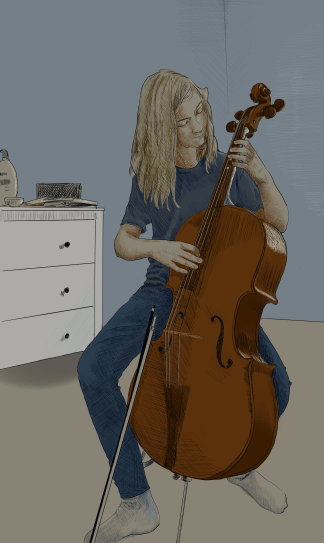
Cellist, digital drawing, 2018


On my recent visit to my granddaughter, she was persuaded to show me what she’d learned in her cello lessons. We talked about the cello while she was setting up. One of the threads on the bow was broken and we wondered what you did about something like that.

“What are they made of?” I asked.

“Horsetail hair,” was the reply.

“Hmm.”

Google told us, soon enough, what to do with the broken strand. Cut it off.

But this use of horsetail hair reminded me of another time in my life when these hairs had done something more than brush flies off a horse’s back end.

I was five, possible six when I first made use of a horsetail hair. On a regular weekday afternoon my two sisters and I, pestered our mother to let us sew doll clothes. We wanted to use a real needle and thread. We’d been allowed before under her supervision. This time Mom said no. She was tired. We had a little brother and he was keeping her up at night. She was going to take a nap, and we were to go outside and play. My mother wasn’t careless of her kids. These were different times and children were taught to grow up faster.

Grumbling and complaining–I’m sure I was the loudest–we went outside with our little scraps of fabric. We wondered around the farmyard in a desultory fashion for a while and ended up in an old broken down storage shed.

It was a grimy place full of rusted metal things, some hanging from the walls on nails, some in boxes stacked on makeshift shelves. There was one tiny window through whose dirty panes light strained to come in past the dirt and fly-blow. Blue-backed flies bumped against the glass trying to get out, wishing they’d never come in.

We found some boxes, arranged them in a row,  and sat.

And sat.

What to do?

My eyes roomed the walls. Nothing of interest. Nothing of–wait! Thread. Long thin threads.

For some reason, our dad had collected a clump of horsetail hairs and hung them on a peg in this shed.

“Hey, we could–”

I wasn’t sure what we could do–but thread! It seemed somehow that we had half the answer to our sewing needs. Where, in this place, could we find a needle?

I pulled one of the horsetail hairs from the peg and had a flash of understanding. The hair wasn’t limp like a thread, it was firm and springy. Maybe…

I came back to the boxes to sit with my sister. I folded the bit of cloth in half and threaded the tip of the horsetail hair through the layers of cloth.

I doubt we got far with our horsetail hair sewing. Little children lose interest fast and it was a dark and dirty place to hang out. I remember the hair going through the fabric, but it must have been a loose weave, for I tried, it again with the broken cello bow thread, and it was reluctant to go through the polyester fabric of my top.

You know those creativity tests where they ask you to think of a zillion things to do with a brick or a paper clip? I don’t do those. Tests make me nervous. But if they ever ask the question: what can you do with horse tail hair? I have at least one creative answer.

What about you? Do you remember a time when you came up with a truly creative idea?
Learning

by Aaron John Gregory

On our recent visit to California we attended the Pacific Grove Good Old Days. I’m not a fan of believing that the old days are somehow better then the ones we’re currently living, but it really didn’t matter because the Pacific Grove Good Old Days are basically a street fair, with arts displays, live music, midway rides for the young, and lot of things for sale including food.

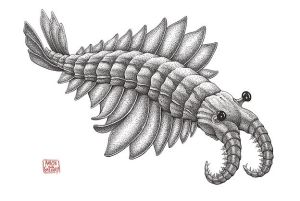
It was a great deal of fun to weave through the various display and sellers booths. Among them we found a real gem–Cotton Crustacean. The booth was manned by Aaron John Gregory and sold T-shirt decorated with beautiful images of sea creatures. If you’re a prog-rock fan you may have heard of Aaron Gregory before. He’s a member of the band Giant Squid. I listen to some progressive rock, but hadn’t heard of Giant Squid before. Give them a listen. They might be just what you’ve been looking for.

Aaron is also an illustrator and designer, and draws the images for the T-shirts himself–hours and hours of night-time stippling. Stippling. I had, of course, heard of it, but it was something I’d never tried. In fact with my high and mighty fine arts degree I probably thought it was beneath me. Phah! I still have a lot to learn.

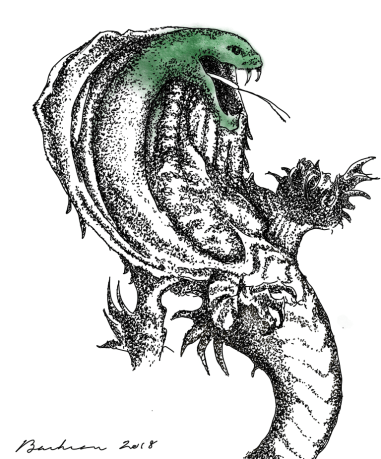
So, I tried it. Aaron uses pen and ink. His images lingered in my mind and while watching television with my husband I started out drawing a creature, cribbed from William O’Connor’s Dracopedia on my Samsung Tab A with S-pen tablet in Autodesk’s Sketchbook Pro. As you can see, I didn’t get the idea of trying the stippling until I’d already added some colour. I let it stand, though it does nothing for the drawing overall. I think I need a whole lot more carefulness. Some of my dots ended up being little lines, but the process was enjoyable and I plan to do it again.

Digital Stippling

Sometimes it’s NOT about the Product

20180416_141051

Sometimes it’s the Experience

I was fortunate enough, in these past ten days, to visit my lovely daughter and her family in California. The Monterey Peninsula is beautiful, Especially at this time of year. In my part of Canada we, still, have snow on the ground and though we have gorgeous spring and summer wildflowers, they are often of the retiring type–small flowers, delicately tinted. Not so in California. Is there a wild flower in the world that speaks out as much as the California poppy? Perhaps, but I haven’t visited that land yet.

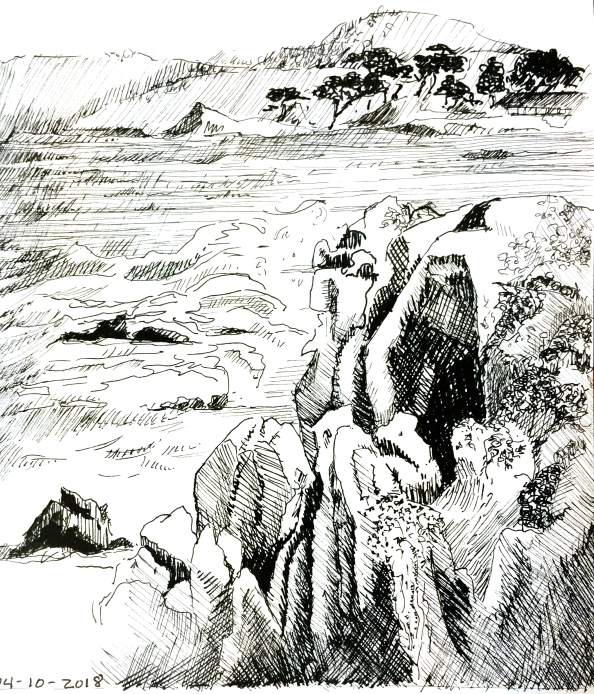
My daughter is an excellent artist, and one of the things we did together was to sit side by side with our sketchbooks, drawing the natural world around us. My results weren’t stellar, but the experience was sublime!

Huion: A New Tool

For a long time now I’ve wanted a digital graphics tablet, in particular, a screen tablet designed especially for artists. Last week I received a lovely gift of birthday money from my son, that he earmarked for a, someday, drawing tablet. You see these tablets, especially the ones developed by Wacom,the giant in graphic tablets, are very expensive.

But, but, but…

New manufacturers are catching up, and after I did a whole lot of research on graphic digital tablets, I found that companies like Huion, Ugee and others are producing excellent products at a fraction of the cost. A Wacom 13″ HD tablet on Ebay is still over a thousand dollars (CDN) whereas this lovely Huion 15.6″ HD tablet was about half that price. I pulled the trigger, as is obvious from the photos above.

So this brings me to a little philosophy about tools for artists. All credit to the wonderfulness of Wacom’s tablets, or Apples various devices, or any of those tools people rate as top of the line in paints, or inks, and papers. I’m glad these wonderful things are out there. But if you think you make art because you can’t afford these amazing things, think again. I hear that Shakespeare didn’t have a MacBook Pro and Scrivener. He managed to do a pretty good job of writing nonetheless.

I think artists are by their nature adapters. If they can’t afford one tool they’ll learn to use another. I haven’t tried a Wacom Cintiq, I can’t make a comparison between it and the Huion tablets.

Is the Huion tablet an excellent digital drawing tool?

I think so. The setup was easy. Krita, my preferred drawing application works well on it. Does it have problems? A couple. I hear it has more paralax (difference between where you put down your pen and where it draws) than some tablets. If it does, it hasn’t been a problem for me. One thing that annoys me a little is that the bottom right corner doesn’t respond as well to my pen touch as I’d like. I’ll figure a work around by moving my brush pallette to another  area of the screen.

So, yes, it’s a tool, but its also a toy and I love it!

Gasp! You’re Giving up Your Studio?

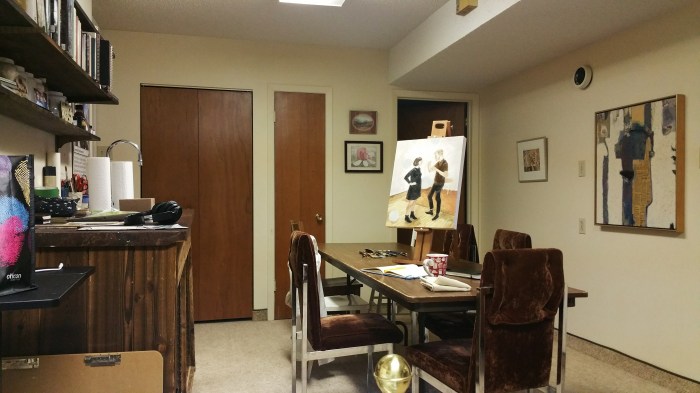
Studio View 330 Ave G

If you’re going to be a serious artist you’ve got to have a studio!

That is one of the things I learned in art school along with things like theme, balance, architectonic strength and structure. It was by far the easiest thing to understand. If you’re going to do work you need a place to do it, and if you are going to take yourself seriously and expect others to take you seriously you need a place you can call a studio. Ideally, this place is not your parents basement. At least that’s what I thought.

Before I even got my degree I managed somehow to secure a studio spaces–sometimes shared–in various warehouses in my home city. The amenities were often far from optimal when ‘very cheap’ is all you can afford. One of these studio spaces was a shared accommodation over a coat factory. On a cold November day, when a New York critic was scheduled to visit and pass comment on my art, the furnace went out. It was as bitterly cold inside as it was outside. Thank goodness she’d worn her silk socks that day.

There were times when I couldn’t afford even the lowliest space, but whenever I could I tried to have a place outside my home as a studio.

But Do you really Need a Studio Space Outside your Home?

Yes and no. The question is akin to Virginia Wolf’s need for a room of her own. I know of writers who clamp on a pair of noise cancelling headphones, find a corner in their home and write award winning material. I know visual artists who work on the kitchen table in their smallish condo. If you’re doing digital work, do you really need to rent an extra place to house your desk and computer/tablet setup? Probably not, especially if the cost of the studio eats up monies you need for that new graphics tablet.

Still, it is a nice thing to have a place to go that has only one purpose–the place you go to create your art. It’s a physical thing and a mental thing. And if your work is very large, or if you use a medium that it would be unwise to expose your family to, like say welding or encaustic painting, then a space with proper ventilation outside of your home is a must. If you have children who could be harmed by your materials, or who demand your attention at all times, you need an outside studio.

Are you judged on your seriousness as an artist by the studio space you have? Maybe, but I’d say don’t let that worry stop you from creating in whatever circumstances you find yourself. It’s not about where you create, it’s about what you create.

As a writer and a visual artist I do think it’s helpful for you to have a space you can go to to shut out distractions in order to focus. it’s helpful, but by no means a prerequisite. Artists are very good at focusing. They wouldn’t have come to their art if they weren’t. It takes a lot of focus to find your talent and go after it.

So why did I give up my studio this week?

Well, to be honest I didn’t exactly. I gave up a very nice space I had in what used to be the preacher’s office on the second floor of an old church that has been converted to studios. I loved this space, but for various reason (including a long period of creative drought–everything I painted sucked) it made sense. This does not mean I’m giving it ALL up. Another thing most artists have lots of is grit. They just keep on, keeping on.

No, I haven’t given up on painting and writing, but I have decided to convert a space in my own home to a studio.

Here is is.

Studio View 3

Painting area

Studio View 4

Digital Workspace

I don’t have the kind ventilation, here, that I would need to continue with encaustic work, so a shift in materials is in order. All to the good. I loved working in encaustic (beeswax and pigment), but I appeared to be at the end of the line with it.

The nice part of this new studio that it can be do triple duty as analog artist studio, digital workstation and writing office.

But hey you, if you can’t afford an off-site studio space or don’t have a room in your home you can commandeer, use your kitchen table. If it works it’s a worthy place. The important thing is not where you work, but that you do.

Eeyore? Pollyanna?

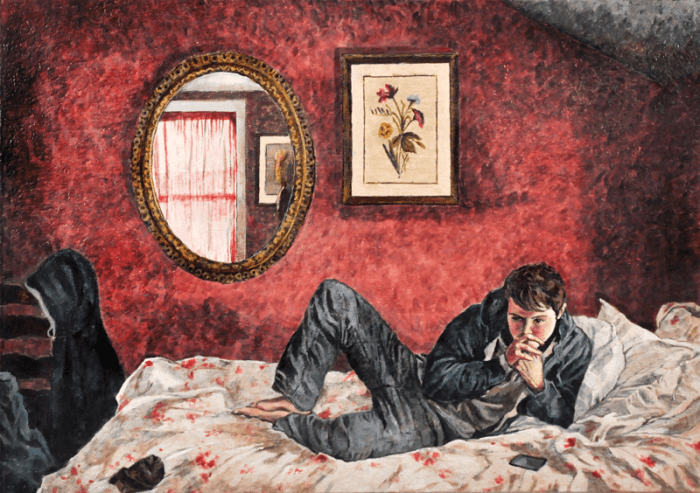
Thoughtful 2016Worry, 2017, encaustic on canvas

It seems to me that young adults and old adult have something in common. Fearfulness. When we’re just emerging into adulthood, we have no idea how to negotiate all the pitfalls of taking care of ourselves, fending for ourselves, making a place for ourselves and being someone. It’s all flailing and floundering and fear that we’ll embarrass ourselves and nobody special will like us. Ever.

In the middle years we kind of sort it out–at least a little. And if we haven’t sorted it out there is no time to do so now, because now we’re in it to the armpits and there’s not time to let fear hold us back. That career needs building and the family needs care. It’s a doing time.

Then comes later adulthood when somehow your back to not knowing quite how to get on in the world. Things swirl around and past you at such speed that you’re left standing slump-shouldered, mouth hanging open wondering what now. You have no idea how you got to this ridiculous place where it scary to go for a walk in case there is ice on the sidewalk, and you’re worried that your grand kids might think you smell funny.

These things can lead to many Eeyore moments for young adults and old adults alike.

I’m not going to suggest going all Pollyana,  but when life get shitty I would suggest finding something that makes you laugh, and then build on the things you know you are good at. There’s something you’re good at, always something, and if you push the limits on that thing you grow, and that is one of the most satisfying things you’ll ever do. Immerse yourself in what you are good at, and when you’re feeling like you could just about handle something else, give it a try. Be optimistic. Optimism won’t kill you you know and if you lose, try again, or try something else and maybe put ice skates on when you go for a walk.

Writing in Times of Sorrow

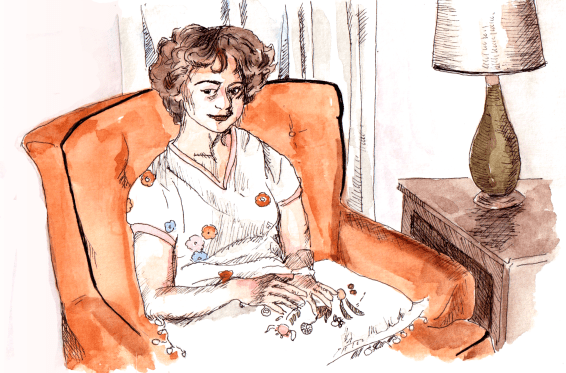
Elenora

I’ll tell you a story. It’s not a long story, and it is mostly not my story. It’s story about my kid sister Elenora who left this plane of existence this week. Above is a sketch I made of her. She was an eighteen-year-old beauty at the time. Her life has been rough and kind as are all our lives.

Elenora loved to come to the big city on day long shopping recursions with her big sister. It was a long day for me, I’d drive for most of an hour to an outlying town, pick her up, drive back into the city, spend the day shopping and lunching and then drive her home again before making my own way home.

On one long driving day we talked sporadically while we listened to the radio.

“Oh cool! Michael Jackson! I love him, don’t you?”

Maybe it was Thriller or Billy Jean, I don’t remember. I made some noises about not liking him all that much.

“Why?” she said.

I stumbled, not really knowing why. “Well, he had all that plastic surgery to change his face,” I said in an off-hand manner. It was a very foolish thing to say and if I didn’t know it then, I did a few minutes later.

Elenora was very quiet for a moment, then she turned to me, her eyebrows drawn together like they sometimes were when she had something important to say and she wasn’t sure how it would be taken.

“Didn’t you ever want to change something about yourself?”

“Ah, erm…I suppose so.” I was still floundering and I already knew how wrong I was, because of course I wished I could change things. Maybe a stronger chin, a less strong nose, maybe some get rid of some quirk that harmed more than it helped.

She picked at the hem of her coat for a moment, and then she said, “If I could change anything about me, I’d change it so I didn’t have Down Syndrome.”

We were both quiet for a long time then. I wanted to say, “you’re fine just the way you are,” but this wasn’t that kind of moment. This was a moment where the big sister had a lot to learn, and just maybe she did.

It is extra hard to write or paint when there is sorrow in your life. To all those struggling, hang in there. Know that you make a difference, and one day soon, you’ll create again. And Michael Jackson? I was wrong. Plain wrong about the music and the man who was trying to live in this world.